
A Licensed Master Esthetician’s approach to keeping your skin happy and hydrated during seasonal temperature shifts.
By: Mary Tuck
I’m Mary, the Director of Marketing and Branding at Habit. I sat down with Victoria Schroeder, Habit’s Director of Education, Licensed Esthetics Instructor, and Licensed Master Esthetician, to talk all things “dry” and “flaky” about your skin this fall.
“Here's the scenario: The party invite is on the calendar, the outfit is picked, and then comes something almost all of us have experienced: you put on foundation, and your skin picks the perfect time to flake. Cakey, patchy, and nowhere near the look you had in mind. Why does this happen?”
“So, cold fall air is the usual suspect, but it’s rarely the only one! Dry skin this time of year can trace back to so many things. Think environment, your current routine, and even your stress levels, which is why a one-size-fits-all approach rarely works. Your skincare routine should change with the seasons. We like to approach skin concerns with a plan: customized professional treatments and an effective homecare plan that evolves with your skin’s needs.”
“Let’s start at home and keep it simple: What products do you recommend if someone is battling dry, flaky skin?”
“Let’s talk cleansers first, as that is the most important part of your skincare routine at home. I’d recommend a creamy cleanser, or something that doesn’t foam up much. My pick is the Face Reality Barrier Balance cleanser. It’s gentle but effective, and it supports the skin’s natural microbiome, which helps maintain your barrier. If you don’t feel clean after a creamy cleanser, try the iS Clinical Cleansing Complex. It’s a gentle gel-based cleanser that’s packed with glycerin, so it cleans without leaving skin tight. Another great option is the GlyMed Vitamin C Cleanser, a creamy, nourishing formula with antioxidants that hydrates while calming redness and inflammation.”
“After a cleanser, what do you recommend for exfoliating the skin? Should you exfoliate if the skin is dry, and if so, how often?”
“Yes, you should definitely exfoliate. Skin cells turn over, on average, every 28 days in younger skin and slow down as we get older. Dead skin that builds up on the surface slows that process down and keeps your products from absorbing. One important note, though: how you exfoliate and what you use depends on your barrier's condition. For a healthy barrier, start with a very light exfoliant once or twice a week; I like the Face Reality Antioxidant Scrub. It’s gentle enough for all skin types and buffs away dry, flaky surface skin, so your hydrating products can actually soak into the skin.”
“What about skin that’s severely dry?”
“If skin is super duper dry, I’d layer a richer barrier cream over your moisturizer at night. My personal go-to is the Barrier Repair Cream by GlyMed. It’s full of amino acids and ceramides that mimic the skin’s natural barrier, so it seals in moisture and helps skin repair overnight. I use it myself and love it. If your skin is beyond dry and you have chapping, I’d start with HydraRemedy by Face Reality, which contains four different types of hyaluronic acid. The Restoring Fulvix Elixir by GlyMed is also an option. It nourishes while calming redness and inflammation. It’s perfect for super-dry, barrier-impaired skin, and gentle enough for daily use. You can also then top these products with Aquaphor for an extra layer of barrier support and to lock in the serums.”
“Okay, let’s talk professional treatments. If someone has an event coming up, how far ahead should they book a service? What is the latest safe date for treatment?”
“At least 7 days before an event is what I would recommend. We have clients that come in days before, and that is okay. We just have to adjust the type of treatment we give. We prefer to work in 90-day increments and plan ahead for upcoming events, which means our treatment plans are made for a 90-day time period and usually consist of one treatment a month. However, if you come to me with less than a week, I can work with that.”
“Okay, so, if you are putting together a treatment plan for 90 days, what is the first treatment you would perform in month 1 if I come to you with less than 7 days before a big event?”
“For the first treatment, less than 7 days before a big event, I would dermaplane first, then follow up with a lighter peel to address dryness - IF the skin can handle it and the barrier is not compromised. The dermaplaning treatment will help prep the skin and leave the skin event-ready, and the peel will provide deeper exfoliation (think: get rid of dead skin). Many peels include hydrating actives that absorb deep into the skin, improve the skin’s barrier, and exfoliate. It is a win-win. With more time, I’d go with a deeper peel following dermaplaning.”
“One last question: If someone does just ONE thing for their skin this fall, what should it be?”
“Switch your homecare products for the season. This includes your cleanser, your moisturizer, your exfoliator, and treatment serums. Use products that are deeply hydrating. This will help combat the dryness and flakiness happening with your skin.”
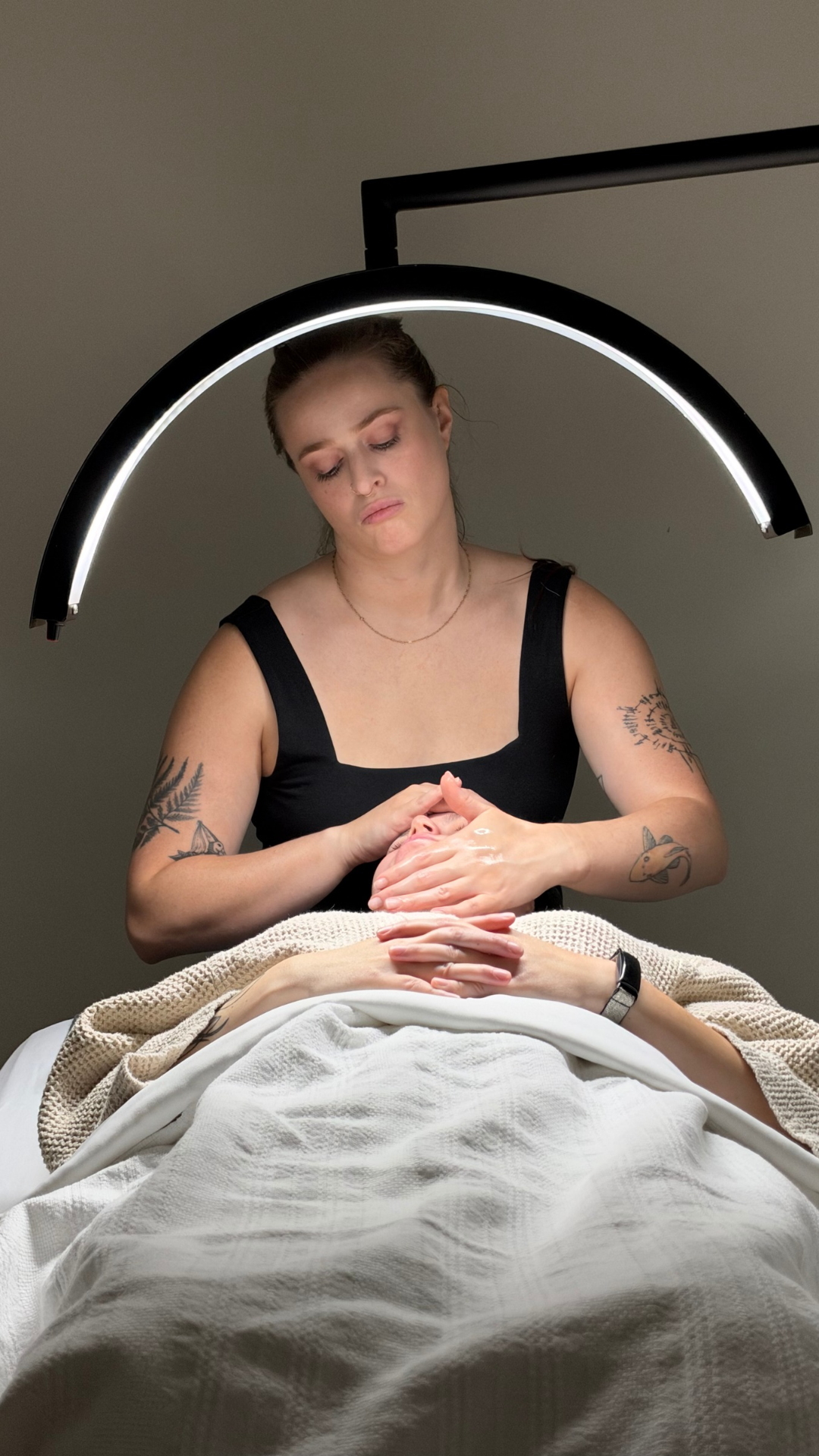
If fall has your skin feeling tight, dull, dry, and flaky, book a facial with our team, and we will build your 90-day treatment plan, from the treatment room to your bathroom counter. Schedule your visit by clicking the “Book Now” link below or call our front desk at 804-491-4111. Remember, we are heading quickly into the holiday rush; we recommend booking in advance.
The path to better skin is Habit.
Here’s a recap and a link to each of the products Victoria recommends:
Face Reality Barrier Balance cleanser
iS Clinical Cleansing Complex
GlyMed Vitamin C Cleanser
Face Reality Antioxidant Scrub
GlyMed Barrier Repair Cream
Face Reality HydraRemedy
Glymed Restoring Fulvix Elixir